
Advertising on the website
Login
News Berlin
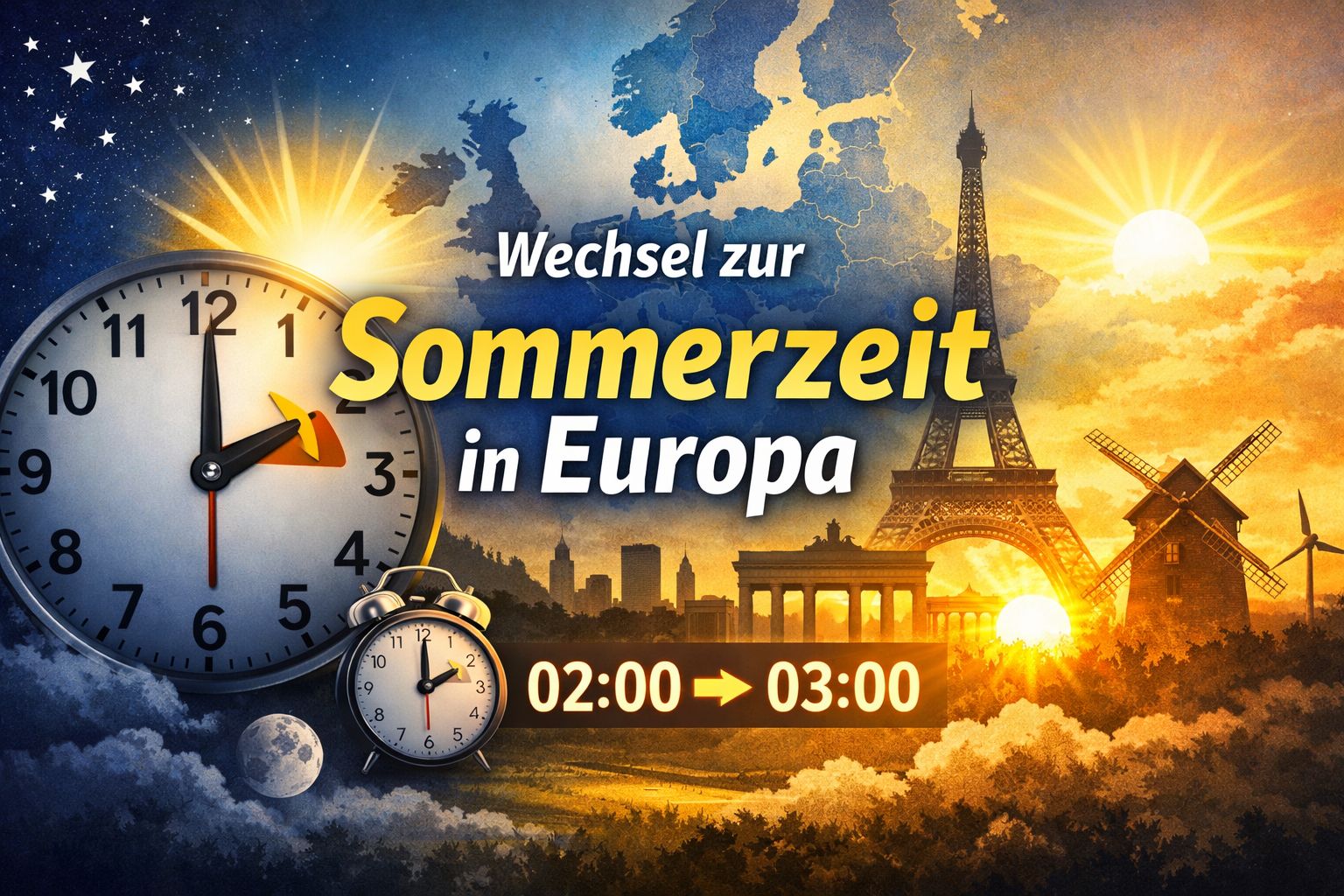
Switch to daylight saving time in Europe

Switch to daylight saving time in Europe

27.03.2026 15302

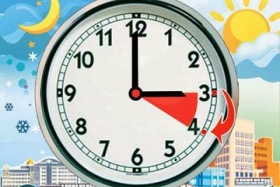
On March 29, 2026, most European countries will switch to daylight saving time (DST) in accordance with the unified time standard “Coordinated Universal Time” (UTC, not to be confused with a time zone), which serves as a reference for all time zones worldwide.

In other words, this is a seasonal shift of official time by one hour forward in spring and one hour backward in autumn, practiced in many countries for decades. Among European countries, only Iceland, the Republic of Belarus, and the Russian Federation do not follow this practice.

Countries in the Central European Time zone (CET) will switch to daylight saving time (CEST) on March 29, moving clocks from 02:00 to 03:00. These include Malta, Monaco, Montenegro, the Netherlands, North Macedonia, Norway, Gibraltar, Hungary, Italy, Kosovo, Liechtenstein, Luxembourg, Slovakia, Slovenia, Spain, Sweden, Croatia, Switzerland, Poland, Austria, San Marino, Serbia, Albania, Andorra, Belgium, Bosnia and Herzegovina, the Czech Republic, Denmark, France, Germany, and the Vatican.

Countries in the Eastern European Time zone (EET) will switch to daylight saving time (EEST) on March 29, moving clocks from 03:00 to 04:00. These include Finland and the Åland Islands, Moldova, Bulgaria, Greece, Estonia, Cyprus, Latvia, Lithuania, Romania, and Ukraine.

It should be noted that this “phenomenon” of switching between summer and winter time has a complex history closely linked to the abolition and reintroduction of this practice at different times. Germany and Austria-Hungary were among the first to introduce daylight saving time in 1916 during World War I, aiming to save coal and conserve energy.

Many countries later abandoned this practice. Germany, for example, abolished it in 1918 and reintroduced it in 1940. After World War II, it was abolished again in 1945, then reintroduced in 1949 in West Germany and in 1950 in East Germany. In the Federal Republic of Germany, it was abolished in 1960 and reinstated during the oil crisis of 1973.

This process is intended to make more efficient use of daylight during the warmer months, saving energy and improving quality of life through longer daylight hours in the evening. Some studies suggest that daylight saving time reduces traffic accidents, lowers crime rates, and increases productivity.

However, these claims are increasingly questioned today and are the subject of ongoing debate.

Modern electronic devices and changing patterns of energy consumption have minimized the potential savings. Moreover, time changes can disrupt human circadian rhythms, lead to worsening of chronic conditions in certain groups, and in some cases increase the risk of depression, other psychological disorders, and temporary loss of concentration. Under certain circumstances, it may also contribute to social dissatisfaction.

In recent years, the European Union has been actively discussing abolishing daylight saving time. The proposal suggests that each country should independently decide whether to remain permanently on summer or winter time. The results of votes and public debates show that opinions are divided, and a final decision requires consideration of many factors, including geographical location, climate conditions, and socio-economic consequences.

Thus, while most Europeans continue to prepare for the annual clock change, the question of abolishing this practice remains open.


Tags: daylight saving time Europe 2026, clock change Europe March 2026, summer time Germany 2026, clock change Germany date, when do clocks change Europe, DST Berlin 2026, CET CEST difference, EET EEST difference, countries changing clocks Europe, daylight saving countries Europe, date of clock change Europe 2026, summer and winter time Europe, DST Europe explanation, clocks forward Europe, why clocks change Europe, history daylight saving Europe, clock change France Italy Spain, clock change Poland Austria Switzerland, clock change Ukraine 2026, summer time Finland Greece Romania, time change health effects, circadian rhythm clock change, energy saving daylight saving, EU daylight saving debate, abolishing DST Europe, news Germany daylight saving, Berlin news clock change, Europe news daylight saving, time zones Europe change, Europe clock adjustment


Categories: Latest
Read also:

Nowruz 2026 in Berlin (Marzahn)

🌸 Nowruz 2026 was celebrated in Berlin (Marzahn). The traditional spring festival brought together cultures and highlighted shared historical values.

Counterfeit money – a direct path to prison…

💶 Counterfeit banknotes decreased in Germany, but Berlin saw a sharp increase. Experts explain the trends and warn about legal consequences.

Зимнее время кануло в Лету

В разгар рекордной летней жары этого года Европейская комиссия открыла жаркую дискуссию среди граждан ЕС. В онлайн-опросе европейцы выразили своё мнение относительно перехода на зимнее и летнее время. Подавляющее большинство высказалось против перевода стрелок два раза в год. Политики ЕС с уважением отнеслись к мнению европейцев и пообещали отменить переход на зимнее время в Европе. Но для этого надо время…

Happy Catholic Easter!

✝️ Easter is the main Christian holiday. Millions celebrate the resurrection of Christ and the renewal of faith around the world.

The distinctive character of Chefs Culinar 2026

🍽 Chefs Culinar 2026 in Berlin brings together experts from gastronomy and wholesale. Focus areas include innovation, sustainability, logistics, and business solutions.

Германия переводит часы

В ночь с субботы на воскресенье (25.10 – 26.10) летнее время в Германии «закончится». В три часа утра часы переводятся на час назад. Многие радуются возможности поспать подольше, а некоторым такие временные изменения доставляют неудобства. С момента введения перехода на летнее время (с 1980 года) в Германии регулярно обсуждается вопрос о его отмене. По данным исследований, у многих людей из-за перевода часов сбиваются биоритмы. Особенно тяжело привыкнуть к изменениям работающим. Также некоторые дети становятся капризными и неуравновешенными. Исследования показали, что нашему организму нужно несколько дней, чтобы привыкнуть к новому времени. Также скептики указывают на то, что летнее время не выполняет своей первоначальной цели. Ведь переход на летнее время должен способствовать экономии энергии. Но по мнению критикующих, эффект энергосбережения вряд ли можно доказать, передает rusverlag.de.

Германия переходит на летнее время

В ночь на воскресенье, Германия перешла на летнее время. Тем, кто еще не успел, напомним, что часы нужно перевести на час вперед. На летнее время одновременно переходят все государства Европейского союза. Переход на зимнее время они совершат в последнее воскресенье октября в 4 часа утра. Тогда стрелки часов надо будет перевести на час назад.

1 May in Germany and the world — traditions, history, significance

🌸 May 1 unites the traditions of spring renewal, respect for labor, and an atmosphere of popular unity, remaining an important holiday in many countries around the world.

Orthodox Easter: meaning and traditions

🐣 On April 12, Orthodox Christians celebrate Easter – a symbol of life’s victory over death and spiritual renewal.

«Новый мир» - новый русскоязычный телеканал в Германии

Новый русскоязычный телеканал «Новый мир» начал спутниковое вещание, пишет OBOB.TV. Основной аудиторией «Нового мира» станут русскоговорящие жители Германии и других стран Европы. По словам руководства канала, его визитной карточкой станет информационная программа «Новое время» - первая в Германии русскоязычная программа новостей, выпуски которой будут выходить 8 раз в сутки. Редакция нового телеканала намерена объективно освещать события в Германии, странах бывшего СССР, а также в мире, рассказывая обо всем, что может быть интересно русскоязычной аудитории. Как отметил Глеб Антонов, продюсер телеканала, ранее русскоязычные жители Европы и Германии могли смотреть либо новости на русском языке, созданные за пределами страны проживания, либо новости на немецком языке. Также в сетке вещания телеканала можно увидеть советские и российские художественные и документальные фильмы, сериалы, популярные информационно-развлекательные программы. «Мы поставили перед собой амбициозную цель — стать первым телеканалом, полностью ориентированным на русскоязычную аудиторию Германии. Это означает, что наша задача не только в том, чтобы наполнить эфир качественным развлекательным контентом, но и заполнить пробелы в информационном пространстве», - заявил Глеб Антонов.

Berlin: how to check whether your rent is legal

🏠 In Berlin, tenants will be able to report inflated housing rent online. The new service will help check whether the rent is legal and protect tenants’ rights.

Possible innovations in the «Law on Weapons»

⚖️ The Berlin Senate proposes tightening the Federal Weapons Act: it wants to equate illegal handling of semi-automatic pistols with serious crimes.

Free swimming courses for schoolchildren in Berlin

🏊 During the summer holidays in Berlin, free swimming courses for schoolchildren will once again be held. Around 3 600 places are planned, including special inclusive groups.

«Together in Lichtenberg» - a neighborhood festival in Berlin

🎉 On June 27 in Berlin's Lichtenberg, a neighborhood festival «Together in Lichtenberg» will take place with music, workshops, a swap, treats, opportunities to meet people, and entertainment for the whole family.

Berlin dancers JRTS became the 2026 German champions

💃 The students of Jana Ritters Tanzstudio from Berlin won in two categories at the 2026 German Dance Championships in Pforzheim.

€333 million for the development of sports in Germany

🏟️ The Bundestag approved €333 million for the modernization of Germany's sports facilities in 2026, including large-scale funding for swimming pools and Berlin's sports infrastructure.

BerlinPay — bonuses for tourists for keeping Berlin clean

🌿 In Berlin, the BerlinPay project is being prepared: authorities plan to reward tourists with bonuses, discounts, and perks for taking part in litter clean-ups and the city's environmental initiatives.

Berliner Freiwilligenbörse 2026: new opportunities

🤝 Berliner Freiwilligenbörse 2026 — the largest volunteer fair in Berlin. Dozens of organizations will present opportunities to participate in social projects. Free admission.

There is still work to be done…

📊 Berlin has published the Social Report 2025, highlighting poverty, employment, inequality, and key social challenges in the city.

Day of Democracy and Cohesion 2026

🎤 The Day of Democracy and Cohesion 2026 took place in Berlin, bringing together representatives of society, authorities, and organizations.

Significant Support for Apprentices

🚆 The new Deutschlandticket Zuschuss-Ausbildung program reduces costs for apprentices to €37.80 per month. The ticket is valid across Germany.

Skilled professionals as the key to success

💼 The Berlin Senate has approved the Berlin Skilled Labour Strategy 2035. The plan focuses on attracting qualified professionals, strengthening education and supporting the capital’s economic development.

Пакет неотложных мер утвержден

Сенатом федеральной земли Берлин утвержден совместный пакет комплексных мер по энергосбережению. Меры, содержащиеся в утвержденном комплексном пакете, будут действовать до 31 марта 2023 года. 

КОНКУРС «ИНКЛЮЗИЯ 2022»

В Берлине объявлен конкурс «Инклюзия 2022». Его инициаторами стали Управление Сената по интеграции, труду и социальным вопросам и организационно подчиненная ему структура - Управление по здравоохранению и социальному обеспечению.  

Пятый сезон года в Германии: веселье начинается

Новый карнавальный сезон стартовал в Кельне, Дюссельдорфе, Майнце и других городах Рейнской области 11 ноября в 11 часов 11 минут. Рейнский карнавал, лучший сезон в Германии, пятое время года – как только не называют это замечательное время веселья. Основные города карнавала - Кельн, Дюссельдорф и Майнц. Особенные поклонники праздника берут в этот день выходной, наряжаются в клоунов, скоморохов, шутов и других реальных или сказочных существ и празднуют большое начало большого праздника, который закончится через четыре месяца грандиозным шествием. Кстати, карнавальные смельчаки в этом году не испугались не только плохой погоды, но и опасности заразиться гриппом. Ведь в первый день карнавала (как, впрочем, и во все другие) положено целоваться - со знакомыми, не очень знакомыми и совсем не знакомыми людьми, передает DW. В Кельне это даже приобрело значение большого события, там появился соответствующий лозунг: «In Kölle jebützt» (в переводе с местного диалекта это означает «Целоваться в Кельне»). Карнавал этого года, открывшийся массовыми гуляниями, всеобщим целованием и весельем, продлится до 18 февраля, «пепельной среды». А главное шествие состоится в «бешеный понедельник» (Rosenmontag). Он и станет кульминацией праздника. До февраля основная карнавальная жизнь будет проходить на заседаниях и праздниках карнавальных гильдий, обществ, групп, в специальных залах и многочисленных кабачках, в тепле и уюте, с неизменным стаканчиком (или даже стаканчиками) кельнского пива, под выступления записных ораторов-юмористов, популярных в «шутовском» народе певцов и музыкальных групп. Источник: DW.de Фото: DW/Maksim Nelioubin