


 Illustration created with the help of AI.
Rogacki Delicatessen to Get a New Lease on Life
The “mosaic” of Berlin cuisine is a tradition that embodies the city’s historical identity, vividly and expressively reflecting its atmosphere of cultural and culinary diversity through flavors and aromas. Currywurst, for example, evokes the spirit of the postwar generation; döner kebab symbolizes the cultural fusion brought to the city by immigrants; and Pfannkuchen—Berlin doughnuts—are a symbol of the warmth of home and cherished family traditions.
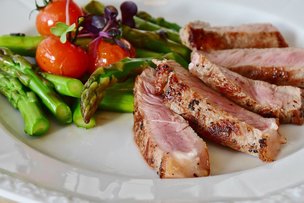
Berlin’s culinary identity today is also a finely balanced blend of recipes borrowed from many of the country’s neighboring regions and reimagined in a local style. At its heart are hearty meat dishes, classic potato sides, and sauerkraut. These include lightly smoked pork cured in nitrite brine (Kasseler), thick, hearty pea soup (Löffelärbsen), the famous Holstein-style schnitzel (Schnitzel Holstein), which over time became a classic of European gastronomy. And, as the pièce de résistance, there is roasted or boiled pork knuckle with crispy crackling (Eisbein) and roast goose with dumplings and cabbage.
The city also offers a fine selection of fairly simple fish dishes. Here are just a few examples:
- smoked eel with a Spreewald-style cucumber and herb sauce;
- perch fried in beer sauce;
- fish soup (pieces of fish in broth with potatoes, dill, carrots, and celery);
- fried pike with salad wrapped in bacon;
- rollmops—rolls of pickled herring fillet with a filling, first created in Berlin and only later becoming popular throughout Germany and Northern Europe;
- carp cooked in beer batter.
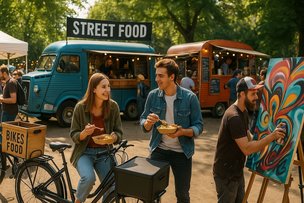
Street food, of course, also has a place of its own in the metropolis: a variety of snacks to eat on the go have become a true symbol of urban life and an important part of the everyday diet of Berliners and visitors to the capital. It is worth noting that the term “Berlin haute cuisine” has become firmly established in the modern capital. It is usually associated with iconic, classic culinary establishments. There are not many of them in the capital, but they do exist.
Until recently, the Rogacki delicatessen (“Rogacki”) held a particularly distinguished place among them. Certain milestones in its development deserve attention, as it became a place that was objectively a symbol of Berlin for many decades, bringing together people from all walks of life.
It opened in 1928, when the Rogacki couple, Paul and Lucia, started a small family business smoking eel and other fish. In effect, it was a shop selling their products. The original location was in what is now the administrative district of Wedding (Bezirk Wedding). In 1932, the range expanded substantially with the addition of meat dishes, game, cheese, and wine. After the war, the Rogacki business “moved” to Wilmersdorfer Straße (Wilmersdorfer Straße, Ortsteil Charlottenburg), into a disused steelworks, which was eventually converted into a large smoking facility and a luxurious delicatessen and snack shop.
Over the years, the Rogacki establishment rightfully became a true cultural center, carefully preserving the finest traditions of the German way of life. Its immense popularity was due to its impressive selection of seafood, smoked and pickled fish (around 70 varieties), prepared on site in historic cast-iron ovens, as well as its cured meat products. And all of this was offered at accessible, or at least very reasonable, prices.
At one time, gourmets and everyday visitors alike most often counted fried marinated herring, pan-fried flounder or cod with potatoes and cracklings, blood sausage with mashed potatoes and sauerkraut, and pickled herring served with a gherkin among the best items on the regular menu. Dishes made with eel or salmon smoked over oak wood were especially popular, as was a variety of flat oyster known as Belon (Belon), cultivated at the mouth of the Belon River in Brittany, France.
In May 2025, the “king of Berlin delicacies,” renowned restaurateur and then owner of Rogacki, Dietmar Rogacki (Dietmar Rogacki), died in a fire at his family villa. In July, the company publicly declared insolvency and ceased operations. By December, all its assets had been sold at auction.
In April 2026, entrepreneur Daniel-Jan Girl (Daniel-Jan Girl), together with journalist Jan Spielhagen (Jan Spielhagen), acquired the rights to the brand, its unique recipes, and its production methods. He founded Rogacki Deutschland Holding GmbH. It has been reported that a new, permanent flagship establishment is planned to open in 2028, for the brand’s 100th anniversary. It may once again be located in the Charlottenburg district (Charlottenburg). However, the legendary Rogacki delicatessen, which operated on Wilmersdorfer Straße for nearly 100 years, will not reopen at its former location.
Restaurant industry professionals and gastronomic “connoisseurs” believe that the revival of Rogacki in 2028 may involve significant changes to the business. These could include expanding the range of smoked fish and fresh game used in signature dishes; offering more services, such as home delivery, online ordering, and the option to buy products through online platforms; adopting more modern food storage and preparation systems; and carefully preserving the established traditions of customer service, among other things.
It is quite possible that these changes will help Rogacki not only maintain its reputation as one of Berlin’s finest delicatessens, but also adapt to today’s market demands and the expectations of its many visitors.
Tags: SAUVAGE restaurant, paleo restaurant in Berlin, best restaurants in Berlin, best restaurants in Germany, African restaurant in Berlin, interesting restaurants in Berlin, Ephraim’s restaurant, restaurants in Berlin, child-friendly restaurant in Berlin, good restaurants in Berlin, Michelin-starred restaurants in Germany, Paris Moskau restaurant, Hofbräu restaurant in Berlin, beer restaurant in Berlin, good restaurant in Berlin, panoramic restaurants in Berlin, Madloba restaurant Berlin, Maccabi restaurant, Cell restaurant in Berlin, Donisl Bavarian restaurant, restaurants in Europe, Rogacki Berlin, Rogacki delicatessen, revival of Rogacki, reopening of Rogacki in Berlin, Rogacki anniversary, history of Rogacki, Berlin culinary legend, Berlin gastronomy, Berlin cuisine, traditional Berlin cuisine, German cuisine in Berlin, Berlin culinary traditions, Berlin delicacies, Berlin fish delicacies, seafood in Berlin, Berlin currywurst, Berlin pork knuckle, street food in Berlin, Berlin street food, history of Berlin gastronomy
Categories: Latest news